Understanding T3, T4 & TSH Tests: What Do Your Thyroid Test Results Really Mean?
Introduction
Feeling tired all the time? Struggling with unexplained weight gain or weight loss? Experiencing hair fall, mood changes, or irregular periods? These symptoms may be linked to your thyroid gland.
While symptoms can provide clues, the only way to accurately assess thyroid function is through a thyroid profile test, which commonly includes T3, T4, and TSH measurements.
Many patients receive their thyroid test reports but find the medical terms confusing.
- What exactly do these tests measure?
- What does a high TSH mean?
- Is a normal T3 level enough to rule out thyroid disease?
In this blog, we’ll break down T3, T4, and TSH in simple language and explain what your results could indicate.
Understanding the Thyroid Gland
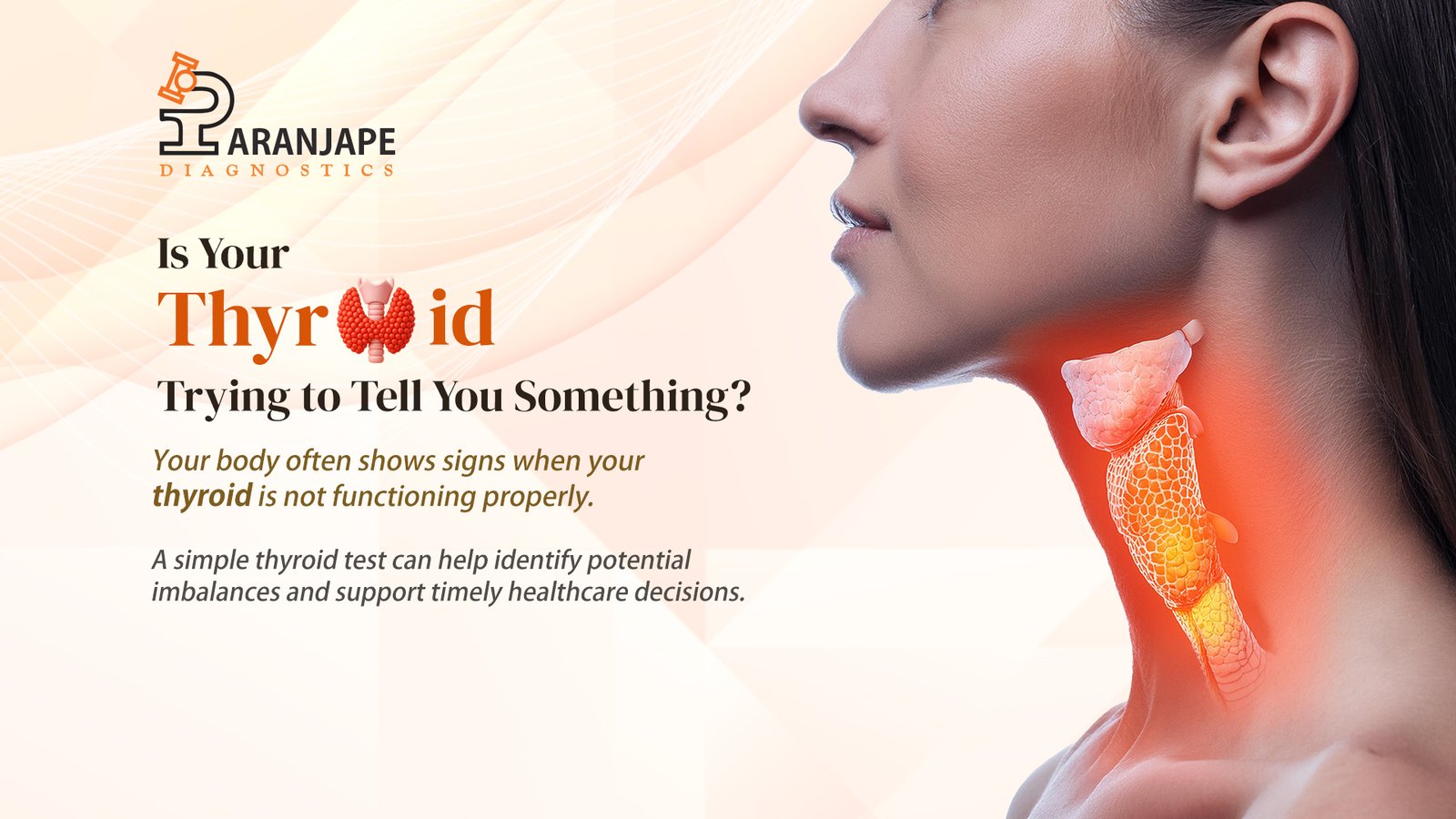
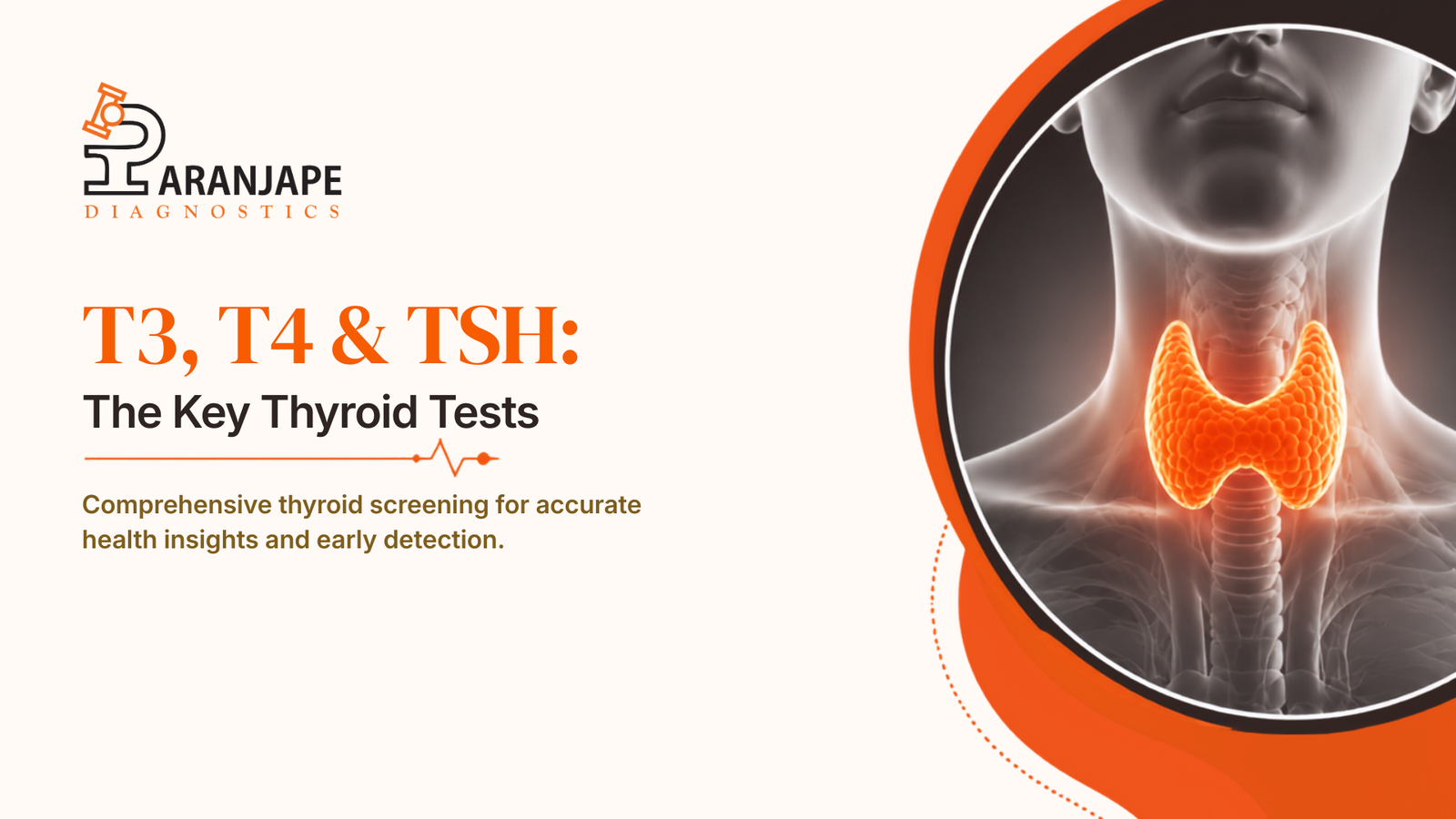
The thyroid is a small butterfly-shaped gland located at the base of the neck. Despite its small size, it influences nearly every organ in the body.
The thyroid helps regulate:
- Metabolism
- Energy levels
- Body temperature
- Heart rate
- Brain function
- Muscle strength
- Reproductive health
To perform these functions, the thyroid produces hormones that travel through the bloodstream and affect cells throughout the body.
What Is TSH?
The Master Controller of Thyroid Function
TSH stands for Thyroid Stimulating Hormone.
Interestingly, TSH is not produced by the thyroid gland. It is produced by the pituitary gland, located in the brain.
Its primary role is to tell the thyroid how much hormone to produce.
Think of TSH as the thermostat that controls a heating system:
- If thyroid hormone levels are low, TSH rises.
- If thyroid hormone levels are high, TSH decreases.
Because TSH responds quickly to hormonal changes, it is often the most sensitive marker of thyroid dysfunction.
What Is T4?
The Thyroid’s Main Hormone
T4 (Thyroxine) is the primary hormone produced by the thyroid gland.
Although T4 circulates in large amounts, it is relatively inactive. It serves as a storage hormone that can later be converted into T3 when the body needs it.
T4 supports:
✔ Energy production
✔ Metabolic activity
✔ Growth and development
✔ Temperature regulation
Doctors often measure both Total T4 and Free T4, with Free T4 providing a more accurate picture of active hormone levels.
What Is T3?
The Active Thyroid Hormone
T3 (Triiodothyronine) is the active form of thyroid hormone.
Most T3 is produced when T4 is converted into T3 in organs such as the liver and kidneys.
T3 directly influences:
- Metabolism
- Heart rate
- Digestion
- Muscle function
- Mental alertness
Changes in T3 levels are often seen in hyperthyroidism, where the thyroid becomes overactive.
Why Are T3, T4, and TSH Tested Together?
No single thyroid test provides the complete picture.
By measuring T3, T4, and TSH together, healthcare providers can better understand:
- Whether the thyroid is functioning normally
- If the thyroid is underactive
- If the thyroid is overactive
- Whether treatment is working effectively
The combination of these three values helps identify both early and advanced thyroid disorders.
What Do High and Low Results Mean?
Scenario 1: High TSH + Low T4
This pattern usually suggests Hypothyroidism (Underactive Thyroid).
Common symptoms include:
- Fatigue
- Weight gain
- Dry skin
- Hair loss
- Constipation
- Depression
Scenario 2: Low TSH + High T3/T4
This pattern usually indicates Hyperthyroidism (Overactive Thyroid).
Common symptoms include:
- Weight loss
- Anxiety
- Rapid heartbeat
- Tremors
- Excessive sweating
- Sleep disturbances
Scenario 3: High TSH + Normal T3 and T4
This may indicate Subclinical Hypothyroidism.
Patients may have few or no symptoms, but monitoring is important because the condition can progress over time.
Scenario 4: Low TSH + Normal T3 and T4
This may indicate Subclinical Hyperthyroidism.
Further evaluation and follow-up testing may be recommended.
Who Should Consider Thyroid Testing?
Thyroid testing may be recommended for individuals who have:
- Persistent fatigue
- Unexplained weight changes
- Hair thinning
- Irregular menstrual cycles
- Fertility concerns
- Depression or anxiety
- Family history of thyroid disease
- Diabetes or autoimmune disorders
Women are generally more likely than men to develop thyroid disorders, especially during pregnancy, after childbirth, and around menopause.
Do You Need to Fast Before a Thyroid Test?
In most cases, fasting is not required for routine thyroid testing.
However:
- Follow your doctor’s instructions.
- Inform the laboratory about any thyroid medication.
- Mention vitamins or supplements, especially biotin, which can affect test results.
Why Early Testing Matters
Many thyroid disorders develop gradually and can remain undiagnosed for months or even years.
Early diagnosis can help prevent complications such as:
- Heart problems
- Infertility
- Pregnancy complications
- High cholesterol
- Osteoporosis
- Severe metabolic disturbances
Regular thyroid screening can help detect problems before symptoms become severe.
Conclusion
T3, T4, and TSH tests are essential tools for evaluating thyroid health.
Together, they provide valuable information about how your thyroid gland is functioning and help identify conditions such as hypothyroidism and hyperthyroidism.
If you’re experiencing symptoms such as fatigue, unexplained weight changes, hair loss, mood changes, or menstrual irregularities, speak with your healthcare provider about thyroid testing.
Early diagnosis and appropriate treatment can make a significant difference to your overall health and well-being.
Read Our Previous Blog
Symptoms of Thyroid Disorders in Men and Women: What You Shouldn’t Ignore
Schedule Full Body Checkup in Pune..
People Also Ask
Get answers to the questions patients ask most often and learn more about symptoms, diagnosis, treatment, recovery, and ways to maintain better health.
T3 (Triiodothyronine) is the active thyroid hormone that controls metabolism, T4 (Thyroxine) is the main hormone produced by the thyroid and is converted into T3, while TSH (Thyroid-Stimulating Hormone) is produced by the pituitary gland and regulates how much T3 and T4 the thyroid gland produces.
A high TSH level usually suggests that the thyroid gland is underactive (hypothyroidism). This means the pituitary gland is producing more TSH to stimulate the thyroid to make enough hormones. Additional T3 and T4 tests help confirm the diagnosis.
In most cases, fasting is not required for a thyroid profile test. However, you should follow your doctor's instructions and inform the laboratory if you are taking thyroid medications or supplements such as biotin, as they may affect test results.
Testing T3, T4, and TSH together provides a complete picture of thyroid function. It helps diagnose conditions like hypothyroidism and hyperthyroidism, detect early thyroid disorders, and monitor the effectiveness of thyroid treatment.
A thyroid profile test is recommended for people experiencing symptoms such as persistent fatigue, unexplained weight gain or weight loss, hair loss, irregular menstrual cycles, anxiety, depression, or heart palpitations. It is also advised for individuals with a family history of thyroid disease, autoimmune disorders, diabetes, or women who are pregnant or planning pregnancy.