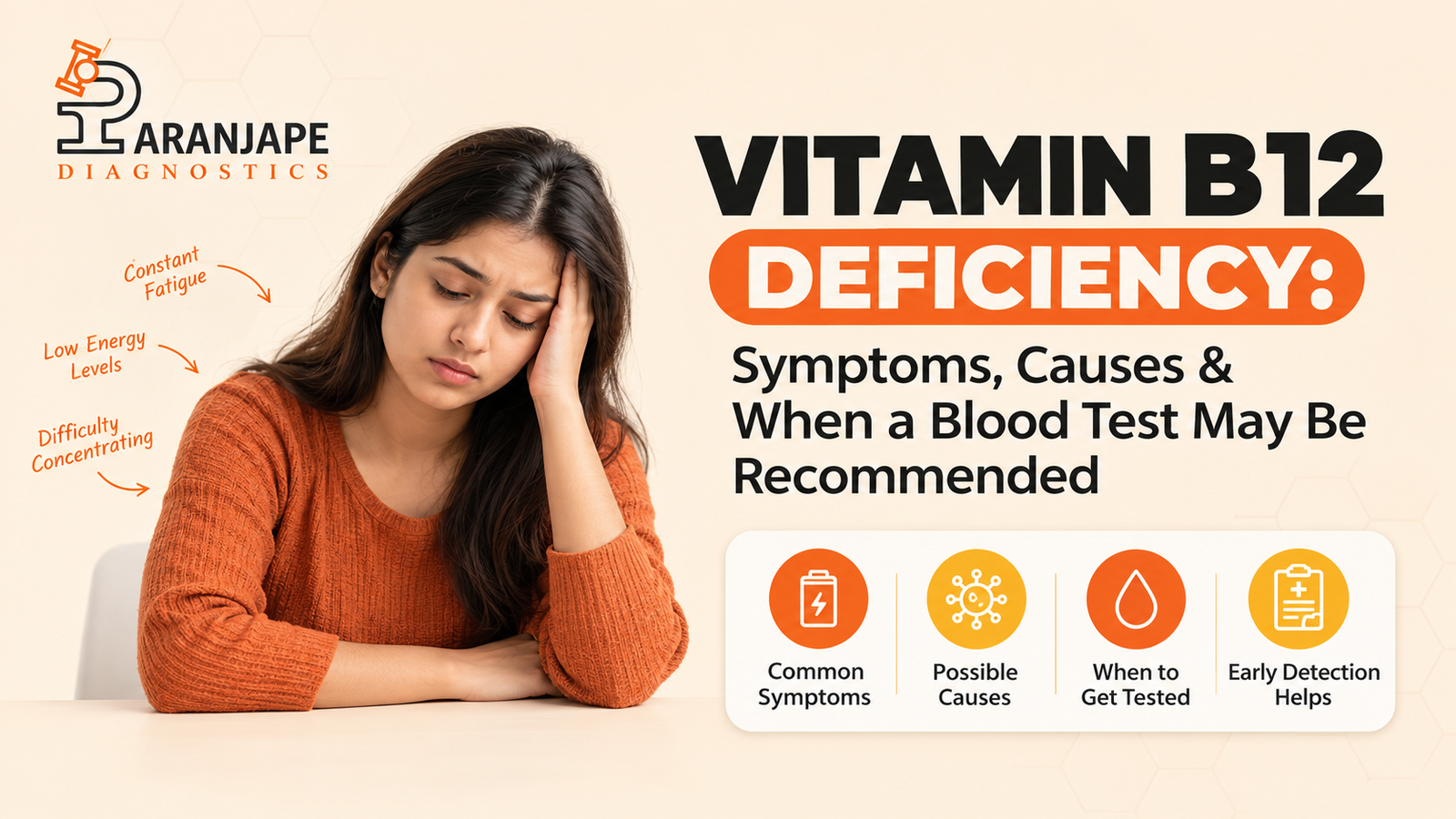
Vitamin B12 Deficiency: Symptoms, Causes & When a Blood Test May Be Recommended
Feeling unusually tired, experiencing tingling in your hands or feet, or struggling with memory and concentration? While these symptoms can have many causes, one possible reason is Vitamin B12 deficiency.
Vitamin B12 is an essential nutrient that plays a vital role in the formation of red blood cells, healthy nerve function, and DNA production. A deficiency may develop gradually, and if left unrecognized, it can affect overall health.
This article explains the symptoms, causes, risk factors, diagnosis, and the role of blood tests in identifying Vitamin B12 deficiency.
What Is Vitamin B12?
Vitamin B12, also known as cobalamin, is a water-soluble vitamin required for several important body functions, including:
- Formation of healthy red blood cells
- Proper functioning of the brain and nervous system
- DNA synthesis
- Energy metabolism
The body cannot produce Vitamin B12 on its own, so it must be obtained through food or supplements when advised by a healthcare professional.
Why Is Vitamin B12 Important?
Adequate Vitamin B12 levels help the body:
- Produce healthy blood cells
- Support nerve health
- Maintain cognitive function
- Assist in normal cell growth and repair
When Vitamin B12 levels become low, these functions may be affected.
Common Symptoms of Vitamin B12 Deficiency
Symptoms may develop slowly and can vary from person to person.
Common symptoms include:
- Persistent tiredness or fatigue
- Weakness
- Pale skin
- Shortness of breath during physical activity
- Tingling or numbness in the hands and feet
- Difficulty maintaining balance
- Memory problems or difficulty concentrating
- Mood changes
- Sore or smooth tongue
- Reduced appetite
These symptoms are not specific to Vitamin B12 deficiency and may occur in other medical conditions as well. A healthcare professional can determine the underlying cause.
What Causes Vitamin B12 Deficiency?
Several factors can contribute to low Vitamin B12 levels.
1. Inadequate Dietary Intake
People who consume little or no animal-based foods may have a higher risk of deficiency if dietary intake is insufficient.
Vitamin B12 is naturally found in:
- Meat
- Fish
- Eggs
- Milk and dairy products
Fortified foods may also provide Vitamin B12.
2. Reduced Absorption
Even when enough Vitamin B12 is consumed, the body may not absorb it effectively due to certain medical conditions affecting the stomach or intestines.
3. Previous Gastrointestinal Surgery
Some stomach or intestinal surgeries can reduce the body’s ability to absorb Vitamin B12.
4. Certain Medications
Some medications may interfere with Vitamin B12 absorption. Do not stop prescribed medicines without consulting your healthcare provider.
Who May Be at Higher Risk?
People who may have an increased risk include:
- Older adults
- Individuals following strict vegetarian or vegan diets without adequate Vitamin B12 sources
- People with certain digestive disorders
- Individuals who have undergone certain stomach or intestinal surgeries
- Those taking certain long-term medications that may affect Vitamin B12 absorption
Having one or more risk factors does not necessarily mean a person has Vitamin B12 deficiency.
How Is Vitamin B12 Deficiency Diagnosed?
Diagnosis is based on:
- Medical history
- Clinical evaluation
- Physical examination
- Laboratory investigations, when advised by a healthcare professional
Blood tests help assess Vitamin B12 levels and may be interpreted along with other laboratory findings depending on the clinical situation.
Blood Tests That May Be Recommended
Depending on the individual’s symptoms and medical history, a healthcare professional may recommend one or more laboratory tests.
Vitamin B12 Test
Measures the level of Vitamin B12 in the blood.
Complete Blood Count (CBC)
A CBC may help identify changes in blood cells that can occur in some individuals with Vitamin B12 deficiency.
Additional Tests
Depending on the clinical assessment, a healthcare professional may advise other investigations if required.
The choice of tests varies from person to person.
How Should You Prepare for a Vitamin B12 Blood Test?
Preparation requirements may vary depending on the laboratory or healthcare provider.
Patients should:
- Follow any instructions provided before the test.
- Inform the healthcare provider about medications or supplements they are taking.
- Discuss any questions regarding test preparation before sample collection.
Can Vitamin B12 Deficiency Be Prevented?
Some cases may be preventable through:
- Eating a balanced diet that includes adequate Vitamin B12 sources
- Following medical advice regarding supplementation when recommended
- Regular health check-ups for individuals at increased risk
- Seeking medical evaluation if persistent symptoms develop
When Should You Consult a Doctor?
You should seek medical advice if you experience:
- Persistent fatigue
- Numbness or tingling in the hands or feet
- Difficulty walking or maintaining balance
- Memory or concentration problems
- Unexplained weakness
- Symptoms that persist despite adequate rest
A healthcare professional can determine whether laboratory testing or further evaluation is appropriate.
Importance of Timely Testing
Laboratory investigations play an important role in supporting the evaluation of Vitamin B12 deficiency when interpreted together with clinical findings. Timely testing, when recommended by a healthcare professional, can help identify nutritional deficiencies and guide appropriate medical management.
Conclusion
Vitamin B12 is essential for healthy blood cells, nerve function, and overall well-being. Because the symptoms of Vitamin B12 deficiency can overlap with those of many other medical conditions, laboratory testing should always be interpreted by a qualified healthcare professional in the context of a person’s symptoms and medical history. If you experience persistent fatigue, tingling sensations, or other concerning symptoms, consult your healthcare provider for an appropriate evaluation.
This article is intended for general health education and should not be considered a substitute for professional medical advice, diagnosis, or treatment.
Frequently Asked Questions (FAQs)
1. What are the early signs of Vitamin B12 deficiency?
Early symptoms may include fatigue, weakness, tingling in the hands or feet, pale skin, and difficulty concentrating. These symptoms can occur in many medical conditions and require medical evaluation.
2. Can vegetarians and vegans develop Vitamin B12 deficiency?
Vitamin B12 is naturally found mainly in animal-based foods. Individuals following vegetarian or vegan diets may require medical guidance regarding dietary sources or supplementation.
3. Is a blood test required to diagnose Vitamin B12 deficiency?
A healthcare professional may recommend blood tests, along with a clinical evaluation, to help assess Vitamin B12 levels and determine the possible cause of symptoms.
4. Can Vitamin B12 deficiency be prevented?
Maintaining a balanced diet with adequate Vitamin B12 intake and following medical advice regarding supplementation, when appropriate, may help reduce the risk of deficiency.
5. Does feeling tired always mean Vitamin B12 deficiency?
No. Fatigue can have many possible causes. A healthcare professional can evaluate your symptoms and determine whether laboratory testing or additional assessment is appropriate.
Schedule Full Body Checkup in Pune..
People Also Ask
Get answers to the questions patients ask most often and learn more about symptoms, diagnosis, treatment, recovery, and ways to maintain better health.
It's advisable to start from age 30–35, or earlier if you have a family history of heart disease, diabetes, or high blood pressure.
Yes. Markers like hs-CRP and Apolipoprotein B can indicate heart risk even when cholesterol levels appear normal, which is why a broader panel is often recommended.
Most labs recommend 9–12 hours of fasting before a lipid profile for the most accurate results. Your lab will guide you on preparation.
For healthy adults, once a year is generally sufficient. If you have diabetes, high blood pressure, or a family history of heart disease, your doctor may recommend more frequent testing.
Unexplained fatigue, breathlessness during routine activity, mild chest discomfort, or irregular heartbeat can all be early indicators even without a classic "heart attack" symptom.