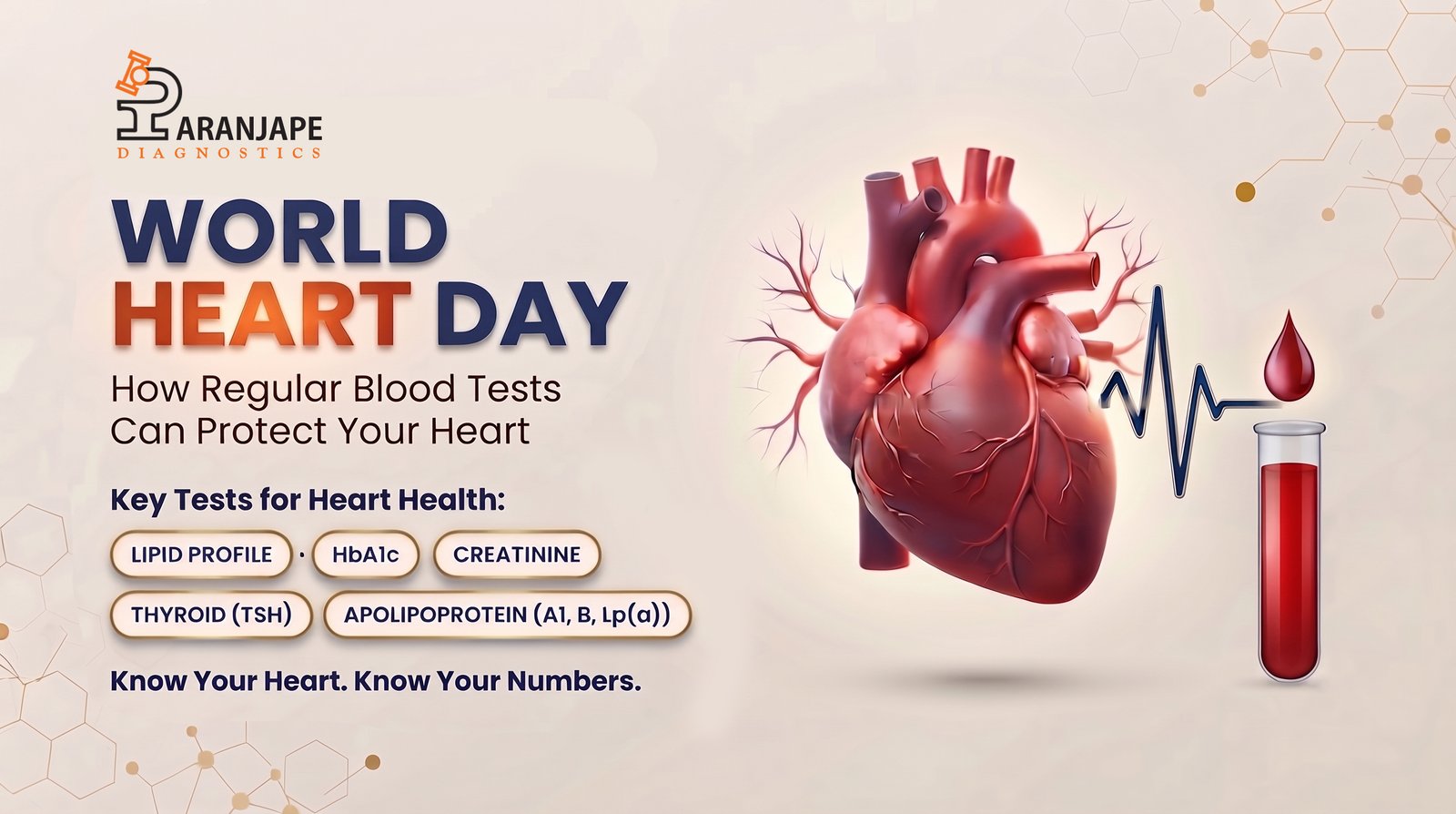
World Heart Day Special – How Regular Blood Tests Can Protect Your Heart
In India, a person suffers a heart attack every 33 seconds and in nearly half of these cases, there were no warning signs beforehand. Heart disease is often called a “silent” condition: many people with high cholesterol, blood sugar imbalance, or early inflammation feel completely fine, right up until a major event occurs. This World Heart Day (September 29), Paranjape Diagnostics wants to remind you that a simple set of blood tests can reveal your heart health status long before symptoms appear.
Why Heart Health Checkups Matter
Cardiovascular disease is one of the leading causes of death in India, and a large share of it is preventable with early detection and timely lifestyle changes. Routine blood tests give your doctor a clear picture of your risk factors, cholesterol levels, blood sugar, and inflammation markers so action can be taken before a crisis, not after. For a more advanced risk assessment, specialized markers like Apolipoprotein A1 and Apolipoprotein B can reveal hidden risks that standard tests may miss.
Myth vs Fact: What Most People Get Wrong About Heart Health
Myth: “I have no symptoms, so my heart must be fine.”
Fact: Cholesterol and inflammation can silently build up in your arteries for years with zero symptoms. Many heart attacks strike people who consider themselves perfectly healthy.
Myth: “Only overweight or elderly people need heart checkups.”
Fact: Heart risk factors are increasingly showing up in people in their late 20s and 30s, driven by sedentary lifestyles, stress, and poor diet regardless of body weight.
Myth: “Normal cholesterol means no heart risk.”
Fact: Markers like hs-CRP and Apolipoprotein B can reveal heart risk even when your standard cholesterol numbers look completely normal.
Key Blood Tests for Heart Health
- Lipid Profile
Measures total cholesterol, HDL (good cholesterol), LDL (bad cholesterol), and triglycerides. High LDL and low HDL levels increase the risk of blocked arteries
Parameter | Normal | Borderline | High Risk |
Total Cholesterol | Below 200 mg/dL | 200–239 mg/dL | 240 mg/dL and above |
LDL (Bad Cholesterol) | Below 100 mg/dL | 100–159 mg/dL | 160 mg/dL and above |
HDL(Good Cholesterol) | Above 60 mg/dL | 40–60 mg/dL | Below 40 mg/dL |
Triglycerides | Below 150 mg/dL | 150–199 mg/dL | 200 mg/dL and above |
(Reference ranges may vary slightly by lab, always check with your doctor for personalised interpretation.)
- Blood Sugar (Fasting & HbA1c)
Uncontrolled blood sugar damages blood vessels over time, making diabetics significantly more prone to heart disease. - hs-CRP (High-Sensitivity C-Reactive Protein)
Detects inflammation in the body, which is linked to a higher risk of heart attacks even in people with normal cholesterol. - Thyroid Profile (TSH)
An underactive or overactive thyroid can directly affect heart rate, cholesterol levels, and blood pressure. - Kidney Function Test (KFT)
Kidney health and heart health are closely connected. Poor kidney function often accompanies cardiovascular disease.
Advanced Heart Risk Markers
- Apolipoprotein A1 (Apo A1)
A protein component of HDL (good cholesterol) that helps clear excess cholesterol from the arteries. Low Apo A1 levels are linked to a higher risk of heart disease, even when standard cholesterol numbers look normal. - Apolipoprotein B (Apo B)
A protein component of LDL (bad cholesterol) and other harmful lipid particles. Apo B is considered a more precise marker of heart disease risk than LDL alone, as it reflects the actual number of artery-clogging particles in the blood.
Who Should Get a Heart Health Checkup?
- Adults above 35, especially with a sedentary lifestyle
- Anyone with a family history of heart disease
- People who smoke, consume alcohol, or are overweight
- Diabetics and those with high blood pressure
- Anyone experiencing fatigue, breathlessness, or chest discomfort
Quick Self-Check: Are You at Risk?
Answer Yes or No to the following. If you tick more than 2 boxes, it’s time to book a heart health checkup:
- I am above 35 years of age
- I have a family history of heart disease or diabetes
- I smoke or consume alcohol regularly
- I have a sedentary lifestyle with little to no exercise
- I’ve experienced unexplained fatigue, breathlessness, or chest discomfort
- I haven’t had a blood test in over a year
Simple Habits for a Healthier Heart
- Include more fruits, vegetables, and whole grains in your diet
- Reduce salt, sugar, and fried food intake
- Exercise for at least 30 minutes, most days of the week
- Avoid smoking and limit alcohol
- Get your lipid profile and blood sugar checked at least once a year
Conclusion
Your heart works every second of every day to give it the attention it deserves. The best time to check your heart health is before you need to. The second-best time is today. This World Heart Day, take a proactive step by getting a simple blood test done. Early detection can be the difference between prevention and a medical emergency.
Book your heart health checkup at Paranjape Diagnostics and take charge of your cardiovascular health today.
Schedule Full Body Checkup in Pune..
People Also Ask
Get answers to the questions patients ask most often and learn more about symptoms, diagnosis, treatment, recovery, and ways to maintain better health.
It's advisable to start from age 30–35, or earlier if you have a family history of heart disease, diabetes, or high blood pressure.
Yes. Markers like hs-CRP and Apolipoprotein B can indicate heart risk even when cholesterol levels appear normal, which is why a broader panel is often recommended.
Most labs recommend 9–12 hours of fasting before a lipid profile for the most accurate results. Your lab will guide you on preparation.
For healthy adults, once a year is generally sufficient. If you have diabetes, high blood pressure, or a family history of heart disease, your doctor may recommend more frequent testing.
Unexplained fatigue, breathlessness during routine activity, mild chest discomfort, or irregular heartbeat can all be early indicators even without a classic "heart attack" symptom.